The Platform

The conversion infrastructure behind your paid channels.

ClickMint builds and operates channel-adapted shopping funnels that align each on-site experience to traffic intent — helping brands increase revenue per user and reduce blended CAC.
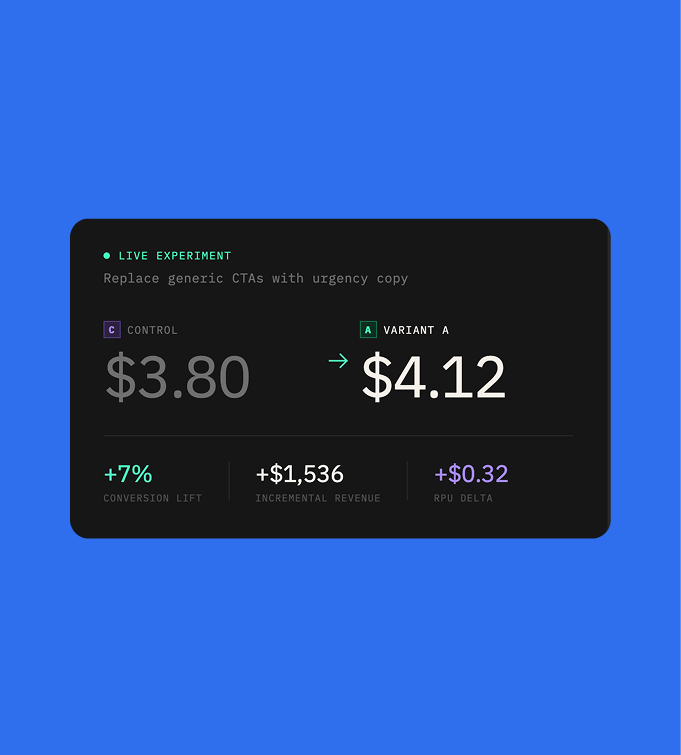
channel revenue per user
results
A/B
Tested against a live control
Read the full story
the platform

Built to increase the yield of your existing channels.

Live
Revenue
$231.4k
↑ +18.2% vs prev period
Conversion Rate
7.00%
↑ +1.4pp vs prev period
Users
4,700
↑ +12.1% vs prev period
Sessions
6,300
↑ +8.9% vs prev period
Revenue Trend
Daily revenue · Feb 8 – Mar 10, 2026
$32k $24k $16k $8k Feb 8 Feb 12 Feb 16 Feb 20 Feb 24 Feb 28 Mar 4 Mar 10
Traffic Trend
Sessions vs. users · same period
8000 6000 4000 2000 Feb 8 Feb 12 Feb 16 Feb 20 Feb 24 Feb 28 Mar 4 Mar 10
Avg Session Duration
4m 12s
Bounce Rate
32.1%
Engagement Rate
84.0%
Total Purchases
476
Channel-Aware Diagnosis
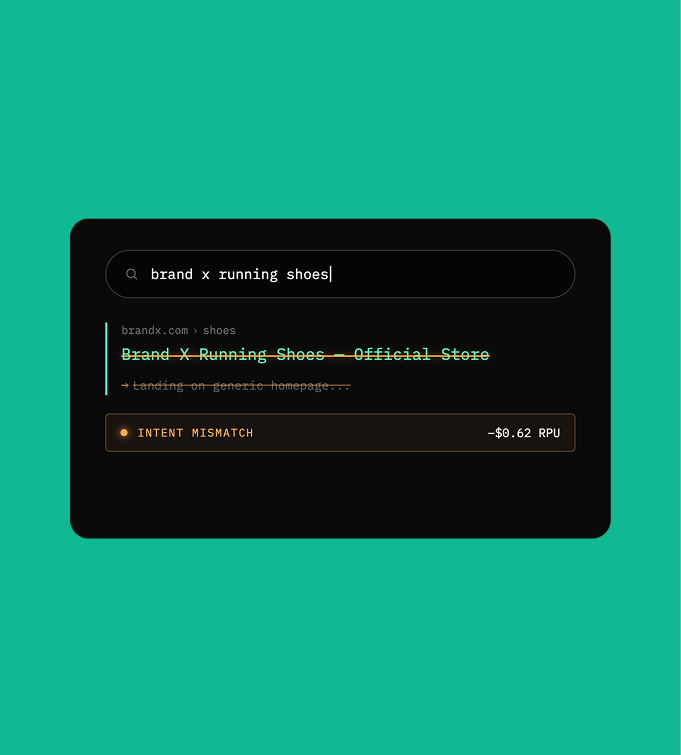
We analyze performance by acquisition source to identify where TikTok, Meta, PPC, and affiliate traffic are leaking revenue before conversion.
Funnel Architecture Design
We design channel-adapted shopping paths that align on-site structure with traffic intent — rather than routing every visitor through the same generic experience.
Paid Funnel Deployment
We deploy channel-specific experiences within your existing stack, preserving the integrity of your personalization, upsell, and checkout systems.
Revenue Impact Modeling
We analyze performance by acquisition source to identify where TikTok, Meta, PPC, and affiliate traffic are leaking revenue before conversion.
INCREMENTAL LIFT · CONTROL VS VARIANT
$6.0 $5.0 $4.0 $3.0 D 1 D 7 D 14 D 21 D 28 D 35 Lift +38% $2.18per user Variant Control Test Period 35 DAYS · 2,180 SESSIONS
MEASUREMENT LAYER · ESTABLISHING BASELINE
Analytics Ad Platforms Storefront Checkout CHANNEL REVENUEPER USER BASELINE $3.42 / user
FUNNEL DIAGNOSTICS · FRICTION DETECTED
01 · View 12,400 02 · Engage 8,640 03 · Add to Cart 2,180 ↓ 04 · Checkout 1,820 Friction Detected · Stage 03 −74.8%
DEPLOYMENT · CHANNEL-ADAPTED FUNNELS
YOUR STACK Personalization Upsell engine Checkout PRESERVED TikTok DEPLOYED Meta DEPLOYED Search DEPLOYED Affiliate DEPLOYED
the managed layer

You get a team, not a ticket queue.

ClickMint’s models and agents drive the diagnostic, deployment, and measurement workflow across the funnel layer, while senior operators guide the system, validate decisions, and keep execution aligned to revenue outcomes.

See how the team works
Funnel Strategist
Guides funnel architecture and validates channel-intent alignment.
CRO Analyst
Reviews friction patterns, hypotheses, and lift opportunities surfaced by the system.
Implementation Lead
Oversees deployment across the existing stack and confirms variant integrity.
Revenue Analyst
Validates incremental lift measurement and translates results into revenue insight.
Compare your options

ClickMint vs. a typical CRO agency vs. an in-house CRO hire

There are three common ways to get conversion work done: hire an agency, hire someone in-house, or bring in a CRO team like ClickMint. Each one can work. Here's how they differ.

CompareClickMintA typical CRO agencyAn in-house CRO hire
What you getAgent-led CRO, run by operatorsAn outside team. Scope varies by agency, from audits and recommendations to full testing programsOne person who owns CRO inside your company
Who decides what to testClickMint, from a channel-by-channel look at where paid visitors drop offThe agency, usually from an audit and a roadmap you approveYour hire, with input from your team
Who designs and runs the testsOur team runs every test. Your team reviews and approves.The agency. Some hand recommendations to your developers, and others implement them.Your hire, plus time from your designers and developers for anything they can't do alone
Setup and accessYour team adds one lightweight snippet. We don't need access to your store, but we do need read access to your GA4.Varies by agency. Ask what access they need to your store and analytics.The same access as any other employee
Time from issue to live testAbout 3 hoursVaries by agency. Ask how long it takes from spotting an issue to a live test.Depends on hiring, ramp-up time and your development queue
How results are judgedA/B test against a control, on revenue per user and conversion rate. If a variant doesn't beat the control, it doesn't go any further.Varies by agency. Ask which metric they report and whether every test runs against a control.Whatever your hire sets up
How you payWe only charge a percentage of the incremental revenue we generate.Commonly a monthly retainer, a project fee or a one-off auditSalary and benefits, plus testing and analytics tools and time spent recruiting
PlatformsBuilt for Shopify brands, and it also works with WooCommerce and Adobe CommerceVaries by agencyWhatever you run
Best fitDTC brands that grow on paid traffic, typically doing $200k+/mo in online sales with $15k+/mo in ad spend, that want testing done for themBrands that want an outside team with a defined scopeBrands with enough testing work to keep a full-time owner busy, that want CRO know-how to stay in-house

ClickMint

What you get

Agent-led CRO, run by operators

Who decides what to test

ClickMint, from a channel-by-channel look at where paid visitors drop off

Who designs and runs the tests

Our team runs every test. Your team reviews and approves.

Setup and access

Your team adds one lightweight snippet. We don't need access to your store, but we do need read access to your GA4.

Time from issue to live test

About 3 hours

How results are judged

A/B test against a control, on revenue per user and conversion rate. If a variant doesn't beat the control, it doesn't go any further.

How you pay

We only charge a percentage of the incremental revenue we generate.

Platforms

Built for Shopify brands, and it also works with WooCommerce and Adobe Commerce

Best fit

DTC brands that grow on paid traffic, typically doing $200k+/mo in online sales with $15k+/mo in ad spend, that want testing done for them

A typical CRO agency

What you get

An outside team. Scope varies by agency, from audits and recommendations to full testing programs

Who decides what to test

The agency, usually from an audit and a roadmap you approve

Who designs and runs the tests

The agency. Some hand recommendations to your developers, and others implement them.

Setup and access

Varies by agency. Ask what access they need to your store and analytics.

Time from issue to live test

Varies by agency. Ask how long it takes from spotting an issue to a live test.

How results are judged

Varies by agency. Ask which metric they report and whether every test runs against a control.

How you pay

Commonly a monthly retainer, a project fee or a one-off audit

Platforms

Varies by agency

Best fit

Brands that want an outside team with a defined scope

An in-house CRO hire

What you get

One person who owns CRO inside your company

Who decides what to test

Your hire, with input from your team

Who designs and runs the tests

Your hire, plus time from your designers and developers for anything they can't do alone

Setup and access

The same access as any other employee

Time from issue to live test

Depends on hiring, ramp-up time and your development queue

How results are judged

Whatever your hire sets up

How you pay

Salary and benefits, plus testing and analytics tools and time spent recruiting

Platforms

Whatever you run

Best fit

Brands with enough testing work to keep a full-time owner busy, that want CRO know-how to stay in-house

Agency and in-house details vary, so ask any partner or candidate how they work.

Comparing specific agencies? See ClickMint vs Shero Commerce, ClickMint vs Blend Commerce or ClickMint vs Netalico.

+93% revenue per user and +65% conversion vs. control, across all our client experiments. Trusted by 80+ brands, with $315M+ in ecommerce revenue analyzed.

Request a Free Audit

Your stack remains intact. The funnel layer evolves.

Designed to work with the tools you already use.

Common Questions

Is ClickMint a SaaS tool or a managed service?

ClickMint is a managed service powered by a proprietary technology platform. Our models and agents handle the heavy lifting across diagnostics, deployment, and measurement, while senior operators guide the system and ensure execution stays aligned to revenue outcomes. No junior account layers, no ticket queue — just experienced operators working alongside purpose-built infrastructure.

What does ClickMint actually do?

ClickMint helps brands generate more revenue from the traffic they already pay for. We diagnose where specific channels are leaking revenue, design channel-adapted funnel experiences, deploy them within your existing stack, and measure incremental lift before broader rollout.

How is this different from a CRO agency?

Traditional CRO agencies usually work in broad sitewide testing cycles and rely heavily on manual analysis, design, and reporting. ClickMint is agent-led CRO, run by operators: our AI agents find where each paid channel leaks revenue and draft the tests; our operators launch each one, prove the lift against a control and scale only what wins. The focus is not just improving conversion in general, but improving the yield of specific acquisition channels.

How is this different from a testing tool?

A testing tool gives your team software. ClickMint gives you the system that sits above the tool layer: diagnostics, funnel design, deployment logic, structured experimentation, and lift measurement. The goal is not to hand you more dashboards, but to operate a higher-yield funnel layer on your behalf.

What part of the funnel does ClickMint affect?

ClickMint operates the post-click experience. That includes how traffic lands, what it sees, how the path is structured, and how the experience is adapted by channel intent. We focus on the layer between acquisition and conversion, where a significant amount of revenue is often won or lost.

How does ClickMint connect to our existing paid channels?

ClickMint does not require you to rewire your media buying operation. We establish the measurement layer, analyze channel-level behavior, and use that signal to architect and deploy channel-adapted funnel experiences aligned to the traffic you are already sending.

What does the onboarding process look like, and how long does it take?

Onboarding begins with measurement and funnel diagnostics, followed by channel-level analysis, architecture planning, and deployment. Most brands can begin moving through the first phase quickly, since ClickMint is designed to operate within the existing stack rather than requiring a major replatform or rebuild.

Do we need to replace our current analytics stack?

No. ClickMint is designed to work with the systems already in place. We establish a clean measurement layer and build on top of your existing analytics and commerce environment rather than asking you to replace it.

Does ClickMint work with our existing storefront and tools?

Yes. Your team adds one lightweight snippet. We don't need access to your store, but we do need read access to your GA4. ClickMint is designed to work alongside the systems powering your storefront, personalization, upsells, checkout, and analytics, without disrupting core infrastructure.

Do we need internal developers or a heavy implementation process?

No. Your team adds one lightweight snippet. We don't need access to your store, but we do need read access to your GA4. Our team guides the rest, so the burden does not fall on your internal team.

Which platforms and systems does ClickMint support?

ClickMint is built for Shopify brands, and it also works with WooCommerce and Adobe Commerce. The vast majority of our brands sell on Shopify. Your team adds one lightweight snippet. We don't need access to your store, but we do need read access to your GA4. ClickMint is designed to work across modern ecommerce stacks and the systems commonly used by paid-growth teams. The exact setup depends on your environment, but the model is built to work alongside existing commerce, analytics, and funnel tooling rather than forcing a new operating stack.

How does ClickMint measure incremental lift across channels?

ClickMint uses structured control-versus-variant measurement within channel-adapted funnels to isolate true experiment impact. That lets us separate correlation from causation and quantify incremental lift in revenue terms before broader rollout.

What metrics does ClickMint optimize for

The core focus is revenue per user, blended CAC efficiency, and incremental revenue impact. Rather than optimizing for clicks or engagement in isolation, ClickMint is designed to improve the quality and monetization of paid traffic after the click.

Does ClickMint optimize for ROAS too?

Yes, but indirectly through better funnel performance. By improving revenue per user and reducing wasted post-click leakage, ClickMint helps increase the return generated from existing paid traffic and improves overall acquisition efficiency.

How quickly can we expect results?

Timing varies by traffic quality, channel mix, and implementation scope, but ClickMint is designed to identify revenue leakage early, deploy structured experiments quickly, and measure lift before scaling what works. The goal is to shorten the distance between diagnosis and measurable business impact.

How do you know whether an experiment should scale?

Experiments are not scaled based on aesthetics or directional optimism. ClickMint measures control-versus-variant performance, quantifies lift in revenue terms, and uses that signal to determine whether a change should be expanded, refined, or retired.

What kind of brands benefit most from ClickMint?

ClickMint is most relevant for brands already investing meaningfully in paid acquisition and looking to improve the return on that traffic. If a brand is buying traffic across channels but still routing everyone through the same generic post-click experience, there is usually meaningful room to improve yield.

See where your current funnel is constraining revenue.

We analyze the post-click experience across your paid channels to identify where value is being lost and where channel-adapted intervention can improve yield.